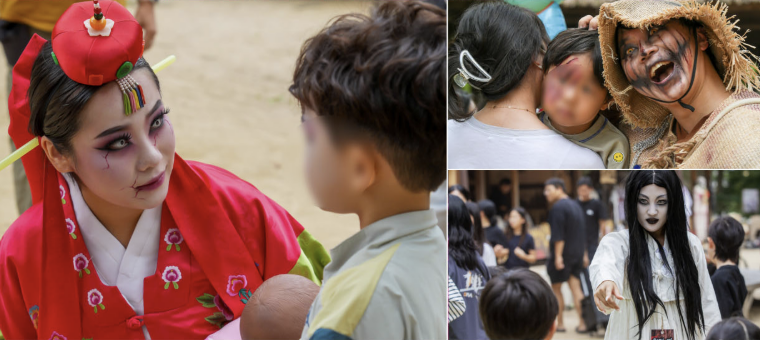
A program at the Korean Folk Village in Yongin, Gyeonggi Province, in which costumed ghosts frighten children into promising to behave, is facing child abuse complaints. Local authorities say they will review how it operates.
The program is widely known as "ghost discipline." Performers in ghost makeup confront children brought in by their parents over habits such as picky eating, throwing tantrums or refusing to bathe, and do not let up until the children promise to change. Online, the ghosts have been nicknamed the "Dark Oh Eun-young," a reference to the psychiatrist and parenting expert known for her TV shows on child behavior.
Yongin City has received nine complaints about the program through the government's online petition portal, according to local reports. One request for a child abuse investigation has also been filed with police, and a complaint has reportedly been submitted to the National Human Rights Commission of Korea.
The city plans to visit the folk village later this month with child experts and police to examine the program. City officials said it is difficult at this stage to classify the program as child abuse.
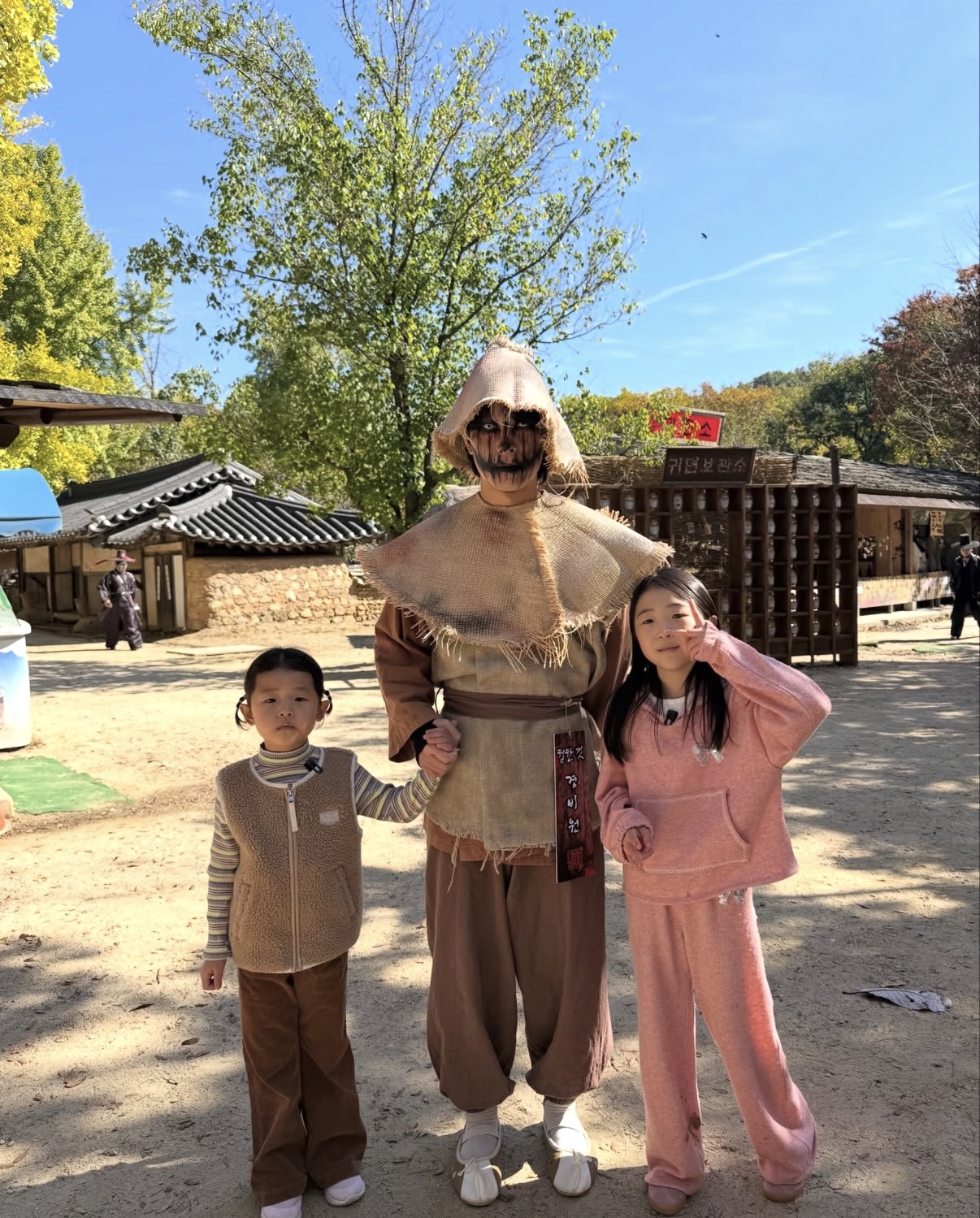
The controversy grew this week after singer Lee Ji-hye posted a video on her YouTube channel on Monday showing her two daughters taking part.
In the video, Lee said she had heard about the program and wanted to see if it worked as quickly as people claimed. She said she was aware that opinions on the method were divided, but did not believe it would go as far as causing trauma.
Her younger daughter, Elly, 5, got scared as soon as she saw the performer. After Lee told the ghost that Elly disliked washing, the performer said germs were the ghosts' friends and threatened to take away children who skip baths or don't brush their teeth. Elly began crying and promised to bathe and do her homework.
Lee later wrote on social media that the experience had worked, saying her daughter was now doing her homework and bathing, and cheering on the folk village.
The folk village says parents sign up for the experience voluntarily and that sessions are stopped immediately if a child becomes severely frightened. It says the program will stop when its nighttime hours end for the season on Sunday, and that it plans to change how the program runs next year.
Critics say using fear to correct behavior may cause young children excessive anxiety and lasting emotional harm. Supporters say it happens with parental consent, is not built only on fear, and that the criticism is overblown.
yoohong@heraldcorp.com